Cloud Bursting: How Do Companies Handle Sudden Traffic Spikes???
HomepageArticlesCloud Bursting: How Do Companies Handle Sudden...
Cloud Bursting: How Do Companies Handle Sudden Traffic Spikes???
Introduction
Some websites and applications occasionally experience massive and unexpected increases in visitor traffic, especially during major events, promotions, or seasonal sales. This is where Cloud Bursting becomes a smart solution for handling sudden workloads efficiently.
What is Cloud Bursting?
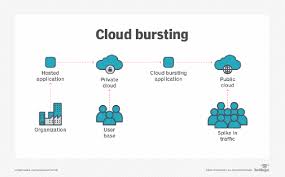
Cloud Bursting is a strategy that uses cloud infrastructure as additional support whenever the primary servers experience heavy load.
How Does It Work?
The application normally runs on the primary infrastructure
When traffic increases, part of the workload is redirected to the cloud
Once the traffic spike ends, the system returns to normal operation
Why Do Companies Use Cloud Bursting?
Handling Traffic Spikes
Resources can be expanded quickly when demand increases.
Cost Reduction
Companies only pay for additional cloud resources when they are actually needed.
Improved Stability
Helps prevent downtime and service interruptions during high traffic periods.
Where is Cloud Bursting Commonly Used?
E-commerce websites
Live streaming platforms
Ticketing and booking systems
Difference Between Auto Scaling and Cloud Bursting
Auto Scaling
Adds more resources within the same infrastructure environment.
Cloud Bursting
Moves part of the workload to an external cloud environment.
Challenges
Requires complex configuration
Data management can become difficult
Needs fast and reliable connectivity between environments
FAQ
Is Cloud Bursting suitable for all projects?
It is most useful for projects that experience seasonal or sudden traffic spikes.
Does it reduce costs?
Yes, because it avoids paying for expensive idle infrastructure that is not always needed.
Conclusion
Cloud Bursting helps companies maintain service stability during unexpected traffic surges without the need to invest heavily in permanent infrastructure. It provides flexibility, scalability, and better cost efficiency for modern applications and online services.
 2019 - 2023 © WELNIZ.LTD. All rights reserved.

 United Arab Emirates (Arabic)
 Worldwide (English)