Data Replication: How Do Servers Prevent Data Loss???
HomepageArticlesData Replication: How Do Servers Prevent Data ...
Data Replication: How Do Servers Prevent Data Loss???
Introduction
Data loss is one of the biggest risks that companies and websites can face. That’s why modern systems rely on Data Replication to protect information and ensure service continuity.
What is Data Replication?
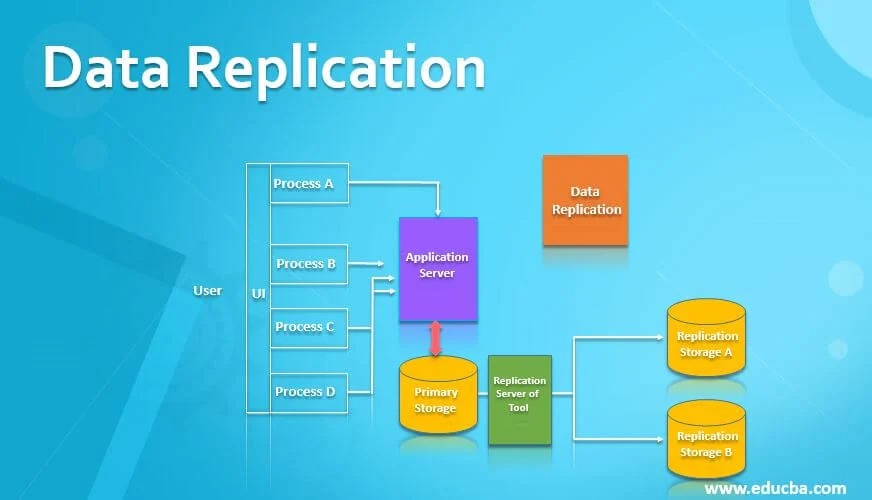
Data Replication is the process of automatically copying data from one server or database to another location in order to maintain a synchronized backup copy.
How Does It Work?
Data is stored on the primary server
It is automatically copied to another server
The replicated copies are continuously updated
Why is Data Replication Important?
Preventing Data Loss
Having additional copies of data significantly reduces the risk of losing important information.
High Availability
If one server fails, another replicated copy can immediately take over.
Improved Performance
Read operations can be distributed across multiple servers to improve speed and efficiency.
Types of Data Replication
Synchronous Replication
Data is updated on all replicas instantly and simultaneously.
Asynchronous Replication
Data updates are replicated after a short delay.
Common Uses of Data Replication
Databases
Cloud storage systems
Backup and disaster recovery solutions
Challenges
Consumes additional hardware and network resources
Synchronizing data between servers can be complex
Higher infrastructure costs
FAQ
Does Data Replication Replace Backups?
No. Data Replication complements backup systems but does not replace them.
Does It Affect Performance?
It may consume some resources, but it greatly improves system stability and availability.
Conclusion
Data Replication is one of the most important modern data protection technologies because it helps prevent data loss and improves the reliability and stability of servers and applications.
 2019 - 2023 © WELNIZ.LTD. All rights reserved.

 United Arab Emirates (Arabic)
 Worldwide (English)