Distributed Database: Why Do Large Applications Rely on It???
Introduction
As data volumes and the number of users continue to grow, traditional databases are no longer sufficient for many modern applications. This is where Distributed Databases come in as a powerful solution for scalability and high performance.
What is a Distributed Database?
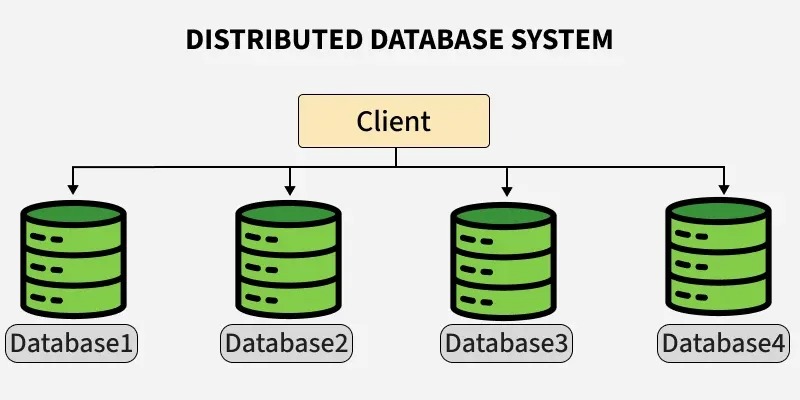
A Distributed Database is a database system where data is distributed across multiple servers or locations instead of relying on a single server.
How Does It Work?
Data is either divided or replicated across multiple servers to achieve:
- Faster performance
- Better stability
- Reduced system failures
Why Do Large Companies Use Distributed Databases?
Easy Scalability
New servers can be added easily as data grows.
High Availability
If one server fails, the service continues running through other servers.
Improved Performance
Workloads are distributed instead of overloading a single server.
Global Application Support
Data can be placed closer to users around the world for lower latency.
Types of Distributed Databases
Replication
Copying the same data across multiple servers.
Sharding
Splitting data into smaller parts distributed across servers.
Common Use Cases
- Social media platforms
- Banking applications
- Large e-commerce websites
- Cloud-based services
Challenges
- More complex management
- Data synchronization can sometimes be difficult
FAQ
Are Distributed Databases always faster?
In most cases, yes — especially with large-scale applications and heavy traffic.
Are they suitable for small projects?
Usually not necessary in the early stages of small applications.
Conclusion
Distributed Databases have become an essential part of modern applications that require high speed, reliability, and scalability.
 2019 - 2023 © WELNIZ.LTD. All rights reserved.

 United Arab Emirates (Arabic)
 Worldwide (English)