As organizations increasingly adopt Kubernetes, Microservices, and cloud-native technologies, infrastructure has become more complex than ever. This growing complexity has led many companies to embrace Platform Engineering as a way to simplify developers' workflows and accelerate software delivery.
Platform Engineering is a discipline focused on building internal platforms that provide developers with the tools and services they need without requiring them to deal directly with infrastructure complexities.
In other words, Platform Engineering teams create a unified environment that enables developers to focus on writing code instead of managing servers, networks, and deployment pipelines.
Organizations faced several challenges, including:
As a result, companies began building centralized platforms that abstract infrastructure complexity from development teams.
A typical internal developer platform provides:
Developers can create and deploy applications without complex manual configurations.
Simplified deployment processes through user-friendly interfaces and automated workflows.
Centralized dashboards for monitoring application performance, logs, and infrastructure health.
Consistent security policies and compliance controls applied across the organization.
Focuses on improving collaboration between development and operations teams to deliver software faster and more reliably.
Focuses on building tools, services, and self-service platforms that empower developers and support DevOps practices.
Rather than replacing DevOps, Platform Engineering complements and enhances it.
Not always. However, as systems and teams grow in size and complexity, Platform Engineering becomes increasingly valuable.
No. Platform Engineering works alongside DevOps and helps teams implement DevOps practices more effectively.
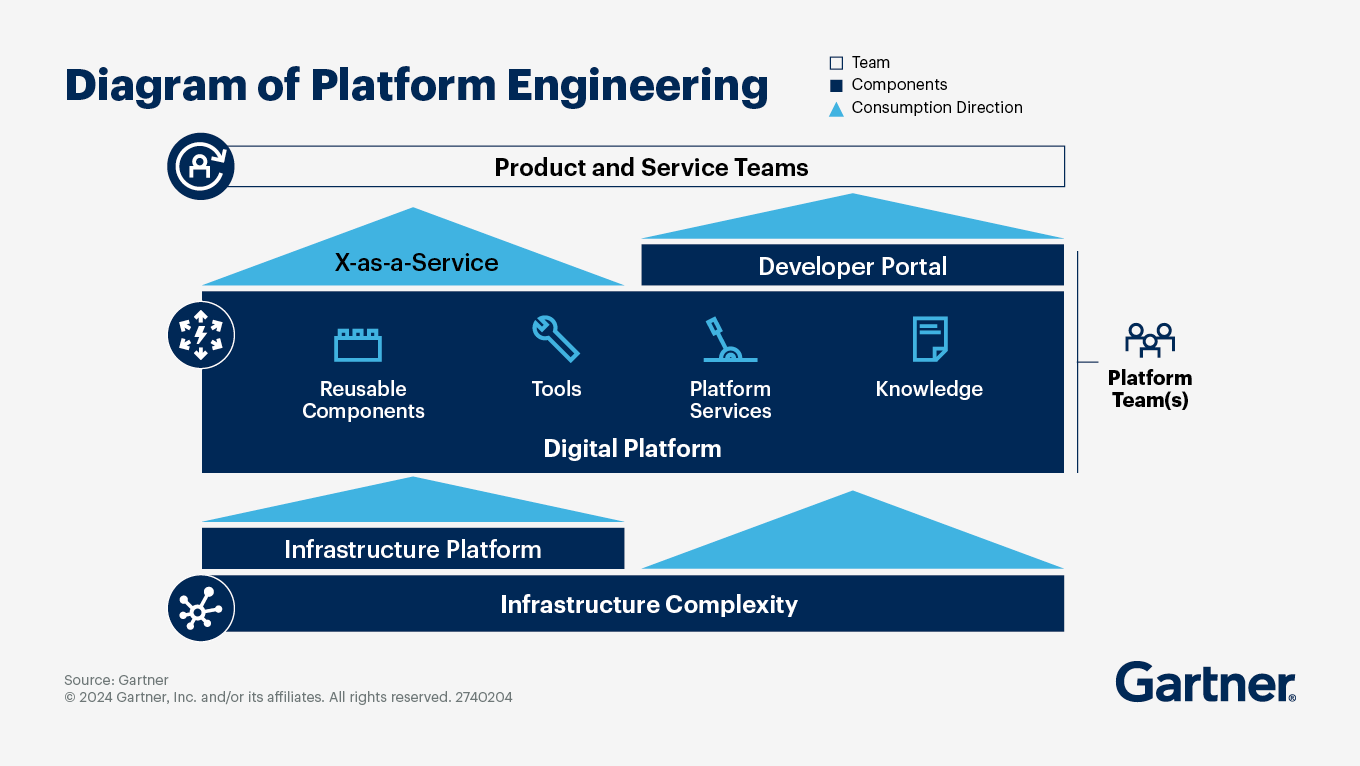
Platform Engineering has become one of the most important trends in modern software development. By reducing infrastructure complexity and providing developers with self-service capabilities, organizations can improve productivity, accelerate innovation, and manage cloud-native environments more efficiently.
 2019 - 2023 © WELNIZ.LTD. All rights reserved.

 United Arab Emirates (Arabic)
 Worldwide (English)