In traditional applications, communication between components was relatively simple. However, with the rise of Microservices, modern systems now consist of dozens or even hundreds of independent services. This is where Service Discovery becomes a critical component, ensuring seamless communication between services.
Service Discovery is a mechanism that allows different services within a system to automatically locate and communicate with each other without requiring manually configured IP addresses or server hostnames.
In cloud-native environments, servers and containers frequently change due to:
Because of these dynamic changes, relying on static addresses is no longer practical.
When a new service starts:
The application itself is responsible for querying the registry and selecting the target service instance.
A Load Balancer or Proxy handles service lookup and routing on behalf of the application.
Services can be added or removed without changing application configurations.
Applications continue functioning even when infrastructure components change.
No need to manually manage server addresses and service endpoints.
Yes. Kubernetes provides built-in Service Discovery through Kubernetes DNS and Services.
Absolutely. Standalone solutions such as Consul, Eureka, and etcd are widely used in non-Kubernetes environments.
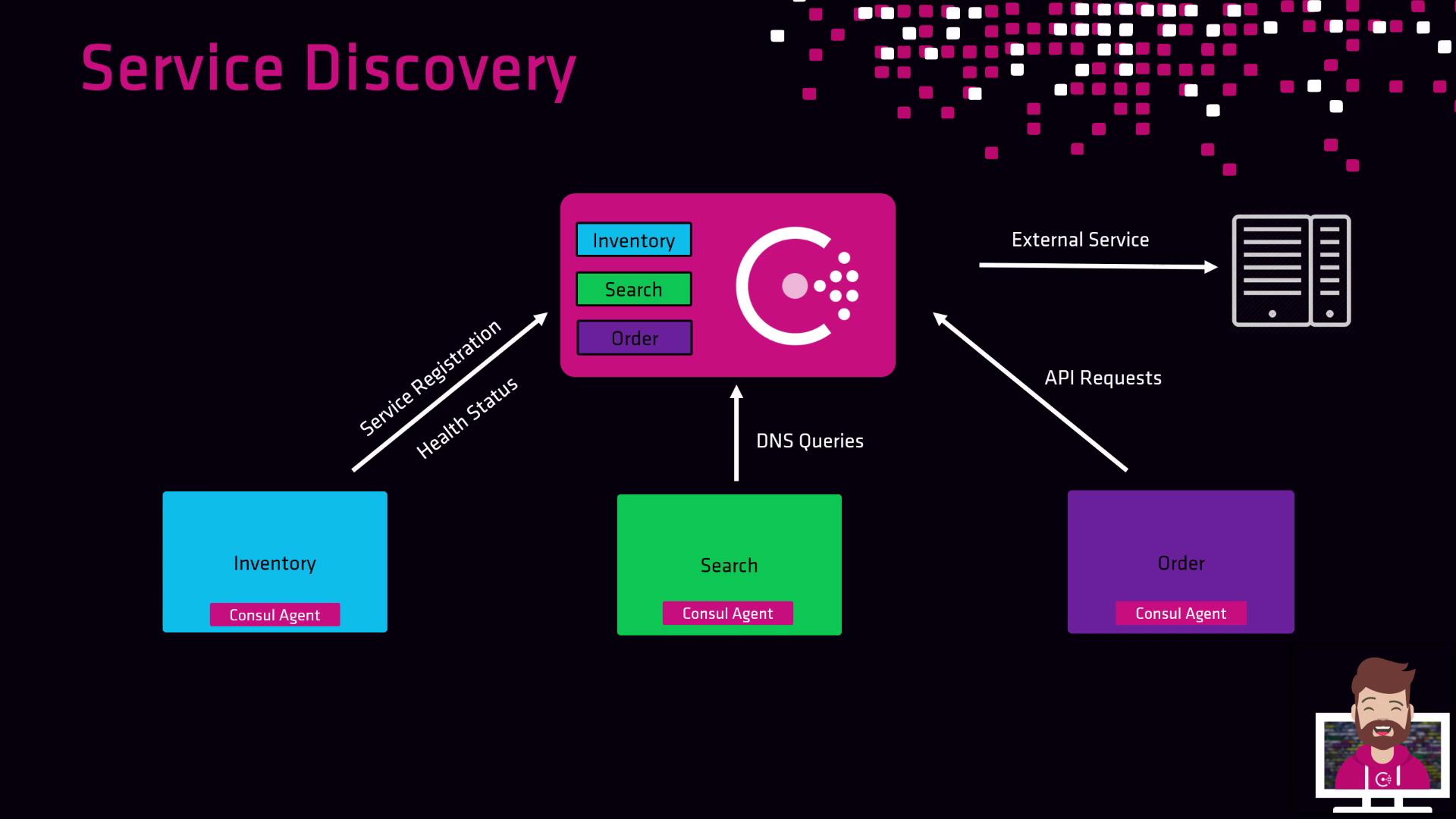
Service Discovery is a fundamental building block of modern distributed systems. It enables services to communicate dynamically, simplifies infrastructure management, and improves scalability and reliability in cloud-native environments.
 2019 - 2023 © WELNIZ.LTD. All rights reserved.

 United Arab Emirates (Arabic)
 Worldwide (English)