Every time an application connects to a database, it consumes time and system resources to establish the connection, authenticate credentials, and initialize a session. As the number of users grows, repeatedly creating and closing database connections can become a significant performance bottleneck.
To solve this problem, modern applications rely on a technique called Connection Pooling, which improves performance and reduces resource consumption.
Connection Pooling is a technique that maintains a pool of pre-established database connections that can be reused by applications instead of creating a new connection for every request.
This allows applications to access the database more efficiently while reducing connection overhead.
Instead of:
The application:
This process is much faster than repeatedly opening and closing connections.
Frequent connection creation can lead to:
Connection Pooling significantly minimizes these issues by reusing existing connections.
Applications spend less time establishing connections and more time processing requests.
Reusing existing connections decreases CPU and memory overhead.
Applications can support more concurrent users without overwhelming the database.
Helps prevent exceeding database connection limits and reduces connection-related failures.
Connection Pooling is widely used in:
Virtually any application that communicates frequently with a database can benefit from it.
Some commonly used tools include:
Each solution offers different features, performance characteristics, and configuration options.
Requests may be forced to wait for an available connection, causing delays.
Too many active connections can overload the database server.
Failing to properly release connections back to the pool can exhaust available resources and degrade performance.
Yes. Even small applications can benefit from reduced connection overhead, especially if they perform frequent database operations.
In most cases, yes. Connection Pooling can significantly reduce response times and improve overall application efficiency.
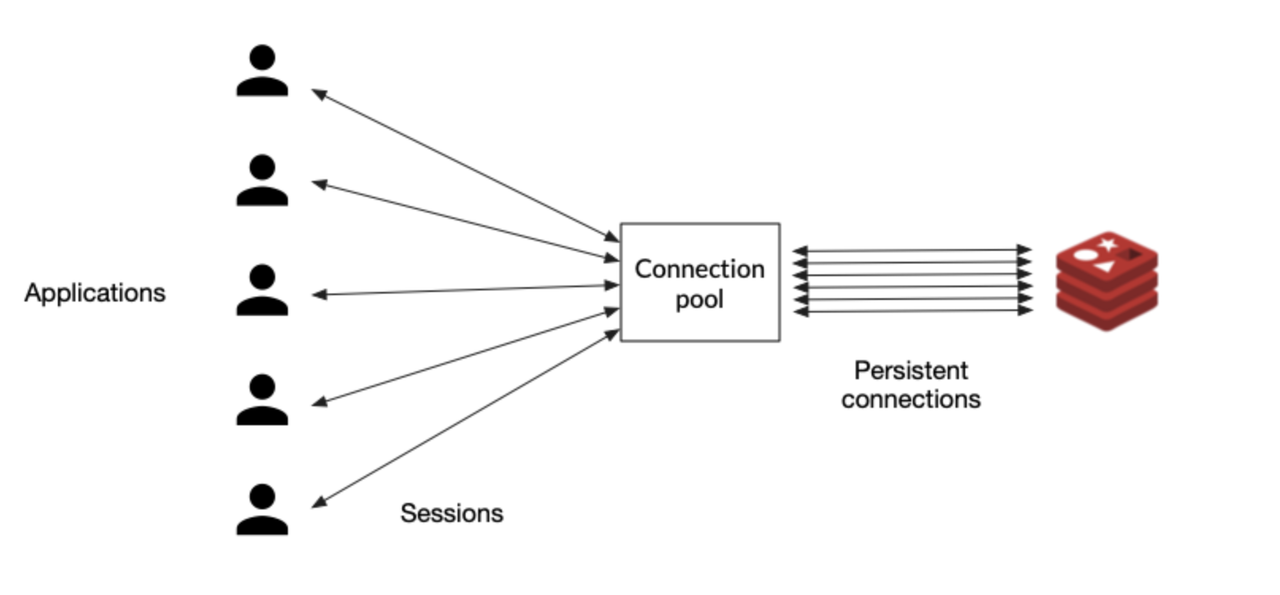
Connection Pooling is one of the most effective techniques for optimizing database-driven applications. By reusing existing database connections instead of constantly creating new ones, organizations can improve performance, reduce resource consumption, increase scalability, and build more reliable systems.
 2019 - 2023 © WELNIZ.LTD. All rights reserved.

 United Arab Emirates (Arabic)
 Worldwide (English)