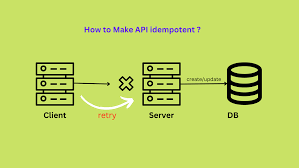
In modern distributed systems, a network interruption may occur immediately after a server successfully processes a request. As a result, the client may assume the request never reached the server and resend it.
If the system is not designed correctly, this can lead to duplicate operations such as double payments, duplicate orders, or repeated notifications.
This is where the concept of Idempotency becomes essential.
Idempotency is a property that ensures performing the same operation multiple times produces the same result as performing it only once.
In other words:
Resending the same request does not cause the operation to be executed repeatedly.
Imagine a user clicks the payment button twice because the network is slow.
Especially in financial and transactional systems.
Critical for distributed architectures where retries are common.
Allows clients to safely retry requests without risking data inconsistencies.
A common approach is to generate an:
A unique identifier associated with a specific operation.
When a request arrives:
This guarantees that only one successful execution occurs for a given key.
The client resends a request when it does not receive a response or encounters an error.
Ensures that repeated requests do not produce duplicate effects.
Retries increase reliability, while idempotency makes retries safe.
Failing to store idempotency keys reliably can lead to duplicate processing.
Removing keys prematurely may allow the same operation to be executed again.
Weak or reused identifiers can cause incorrect behavior and data inconsistencies.
Not necessarily.
However, it is highly recommended for operations that create, modify, or process critical data, especially financial transactions.
Yes.
GET requests are generally considered idempotent because they retrieve data without modifying the system's state.
Yes.
Although POST is not inherently idempotent, applications can make it idempotent by using techniques such as Idempotency Keys.
Idempotency is a fundamental concept in modern system design. It prevents duplicate operations, improves application reliability, and enables safe request retries during network failures. Whether you're building payment systems, APIs, or distributed services, implementing idempotency correctly is essential for maintaining data integrity and delivering a reliable user experience.
 2019 - 2023 © WELNIZ.LTD. All rights reserved.

 United Arab Emirates (Arabic)
 Worldwide (English)