When working with modern networking technologies, Kubernetes, or cloud service providers, you will frequently encounter two important concepts: Control Plane and Data Plane.
Understanding the difference between them is essential for grasping how modern systems are managed and how data flows within them.
The Data Plane is the part of the system responsible for handling and forwarding actual data traffic.
In other words, it is the path through which requests, packets, and application data travel during normal operations.
The Control Plane is responsible for making decisions and managing the overall system.
It does not carry the actual data; instead, it determines how data should be routed, processed, and controlled.
Imagine a highway system:
The Data Plane moves traffic, while the Control Plane manages and directs it.
The Kubernetes Control Plane typically consists of:
These components are responsible for managing the cluster and maintaining its desired state.
The Kubernetes Data Plane consists of:
These components run workloads and process application traffic.
Management tasks are separated from data processing, preventing unnecessary overhead on traffic handling.
The Control Plane and Data Plane can be scaled independently based on workload requirements.
Separating management functions from operational traffic reduces the attack surface and improves security controls.
The Control Plane and Data Plane model is widely used in:
Yes. In some situations, workloads may continue running temporarily even if parts of the Control Plane become unavailable.
Both are essential. The Control Plane manages the system, while the Data Plane executes its instructions and carries the actual traffic.
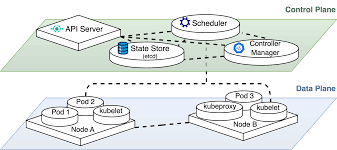
The Control Plane is responsible for management, orchestration, and decision-making, while the Data Plane is responsible for forwarding and processing data. Understanding the distinction between these two layers is fundamental for anyone working with modern cloud-native infrastructure, networking, and distributed systems.
 2019 - 2023 © WELNIZ.LTD. All rights reserved.

 United Arab Emirates (Arabic)
 Worldwide (English)