eBPF: The Technology That Revolutionized Linux Observability:
HomepageArticleseBPF: The Technology That Revolutionized Linux...
eBPF: The Technology That Revolutionized Linux Observability:
Introduction
For many years, system administrators relied on traditional tools to monitor performance and troubleshoot issues in Linux environments. However, with the rise of cloud-native architectures and containerized workloads, a new technology emerged that transformed the way systems are monitored, secured, and analyzed: eBPF.
What is eBPF?
eBPF stands for:
Extended Berkeley Packet Filter
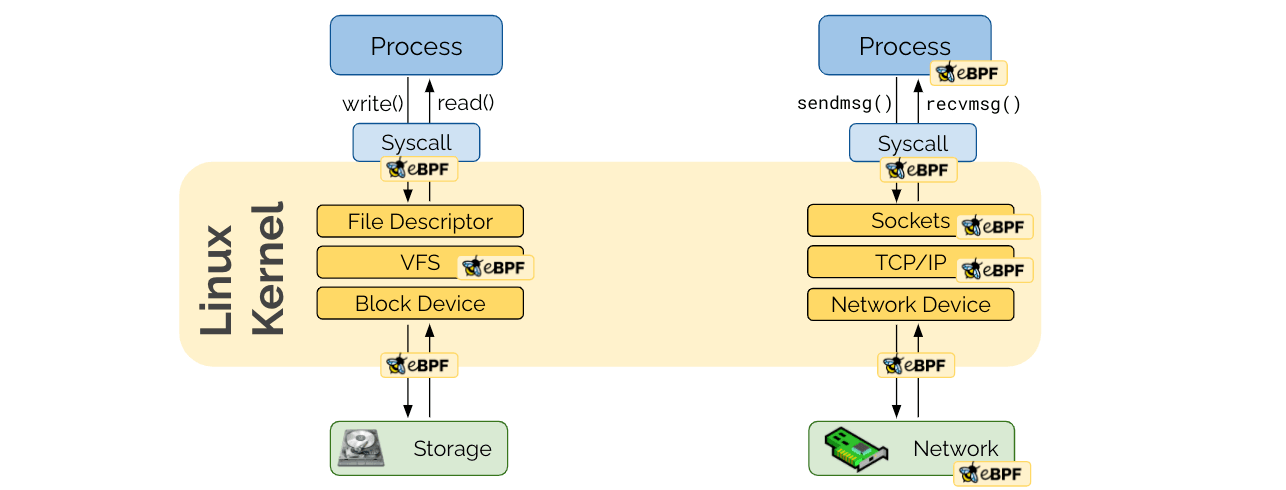
It is a powerful framework within the Linux kernel that allows developers and administrators to run small, secure programs directly inside the kernel without modifying the kernel source code itself.
Why Is eBPF Important?
Traditionally, deep system monitoring often required:
Modifying application code
Installing resource-intensive monitoring tools
Restarting services to collect diagnostic data
eBPF eliminates many of these limitations by providing detailed visibility into system behavior while applications are running, with minimal performance overhead.
What Can eBPF Do?
Performance Monitoring
Provides deep insights into CPU, memory, disk, and application performance.
Network Observability
Tracks and analyzes network traffic flowing through the system.
Security Enhancement
Detects suspicious activities and potential security threats in real time.
Application Analysis
Helps engineers understand how applications behave during execution and identify bottlenecks.
Where Is eBPF Used?
Kubernetes environments
Cloud-native platforms
Data centers
Cybersecurity and threat detection systems
Popular Tools Built on eBPF
Cilium
Provides advanced networking, observability, and security for Kubernetes environments.
Pixie
Offers automatic application monitoring and troubleshooting.
Falco
Detects abnormal and potentially malicious system activity.
bpftrace
A powerful tracing tool for Linux performance analysis and debugging.
Advantages of eBPF
High Performance
Runs efficiently within the Linux kernel with minimal overhead.
Low Resource Consumption
Provides deep observability without requiring heavy monitoring agents.
Real-Time Visibility
Enables live monitoring and analysis of system behavior.
Exceptional Flexibility
Supports a wide range of networking, security, and observability use cases.
Challenges
Requires Linux Knowledge
Understanding Linux internals can be important for advanced eBPF usage.
Learning Curve
Some use cases and tracing scenarios can be complex for beginners.
Development Complexity
Building custom eBPF programs often requires specialized expertise.
FAQ
Is eBPF a replacement for traditional monitoring tools?
Not entirely. However, it has become a foundational technology that enhances and complements modern observability platforms.
Does eBPF work only on Linux?
Yes. eBPF was designed specifically for the Linux kernel and relies on kernel-level capabilities.
Conclusion
eBPF has become one of the most significant innovations in the Linux ecosystem. By enabling secure, high-performance monitoring, networking, and security capabilities directly within the kernel, it empowers organizations to gain deeper visibility into their systems while maintaining efficiency and scalability.
 2019 - 2023 © WELNIZ.LTD. All rights reserved.

 United Arab Emirates (Arabic)
 Worldwide (English)